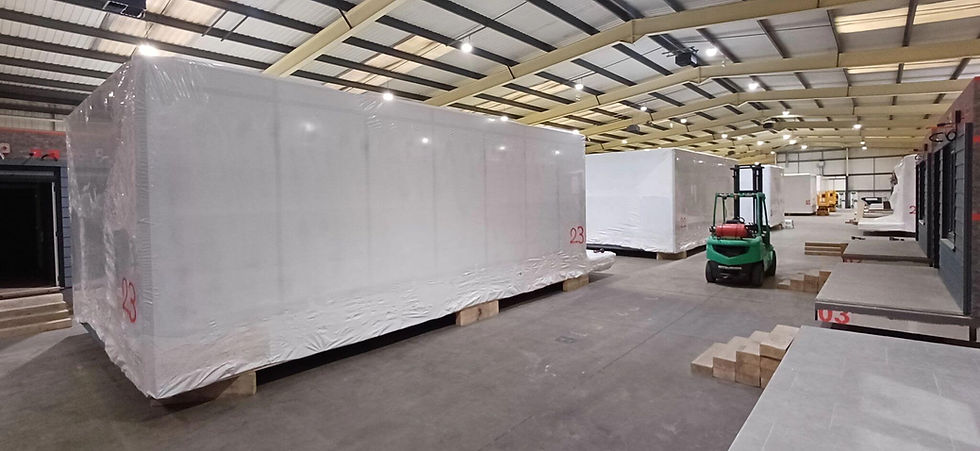
MoD Units – Shrink Wrap Protection for Delivery to Devon

Updated: Jun 17

EcoShrink installed shrink wrap protection around prefabricated units bound for an MoD site in Devon, creating a clean, weather-resistant outer envelope ready for handling and transport. The wrap package was designed to help protect the units during movement through the logistics chain while maintaining a tidy, delivery-ready appearance on arrival.
Project Summary at a Glance
End use: Prefabricated units for an MoD site
Destination: Devon
Category: Modular Covers / specialist transport protection
Scope: Shrink wrap protection before delivery
Primary objective: Protect the units during storage, handling and transport
Result: Clean, transport-ready units with reduced weather exposure during the delivery programme
The Brief 🎯
The brief was to protect the units before they were moved to Devon so they could travel with reduced exposure to weather and handling-related contamination. The wrap needed to sit neatly across the full unit envelope and provide a consistent finish suitable for onward movement and site arrival.
Key Risks and Objectives
Protect the units from wind, rain and general transport exposure
Maintain a tidy, professional external finish before delivery
Support handling and movement with a clean, transport-ready wrap package
Apply a consistent protective standard across the delivered unit envelope
Our Method (How EcoShrink Delivered It)
Scope planning around movement and delivery
Confirmed unit dimensions, storage position and transport requirements.
Planned wrap lines and seam positions to suit handling and onward delivery.
Shrink wrap installation for transport protection
Installed shrink wrap to create a weather-resistant outer skin around the unit.
Focused on neat seams, consistent corners and a clean external finish.
Final checks before movement
Installed zip doorways at the required access points to keep the units practically usable during the programme.
Positioned access points to support inspections, works and internal entry without undermining the integrity of the outer wrap.
Final checks and handover
Checked continuity of the wrap and overall finish quality prior to delivery.
Confirmed the unit presented as protected and ready for onward movement to
Devon.
Results and Outcomes
The completed wrap package helped protect the prefabricated unit through handling and transport, supporting cleaner arrival condition and a more consistent delivery-ready finish.
Outcomes (claims-safe, observable):
Prefabricated unit protected during handling and transport
Cleaner, more consistent external presentation before delivery
Reduced weather exposure during movement and logistics
Practical transport protection aligned to prefabricated unit delivery requirements
Sustainability and Materials (Claims-safe)
Transport protection for prefabricated units is typically driven by programme, logistics and the need to preserve finished surfaces during movement. End-of-life handling depends on the condition of the wrap after delivery and the waste routes available on site. Where material remains clean and segregated, practical recycling options may be improved through local facilities and contractor arrangements.
Next Steps
If you need prefabricated units protected before transport or delivery, EcoShrink can scope the package and propose a shrink wrap solution designed around movement, storage and site arrival requirements.
FAQ
Why wrap prefabricated units ahead of a secure-site delivery?
Wrapping protects units from weather and handling damage between the factory and a controlled MoD site, supporting a clean, documented arrival.
Can multiple units be wrapped and sequenced in one delivery run?
Yes. A run of units is wrapped to a consistent standard and sequenced with the transport plan so each arrives protected and in order.
How is wrapping coordinated with restricted-access sites?
Timing, handling and access constraints are agreed up front so wrapped units can be delivered and offloaded within the site's controlled conditions.