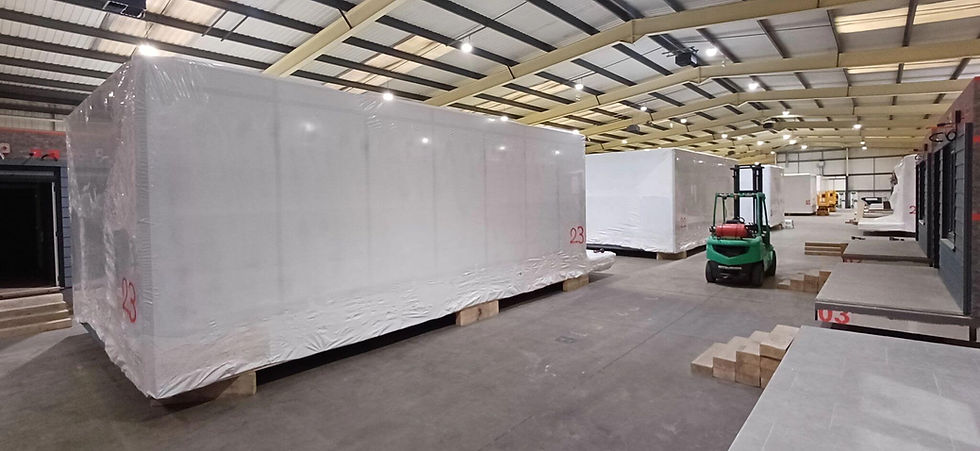
Lincolnshire – Multiple Modular Homes Shrink Wrapped with Access Zip Doorways

Updated: Jun 17

EcoShrink installed shrink wrap protection around multiple modular homes in Lincolnshire, creating a clean, weather-resistant outer envelope while maintaining practical access through planned zip doorways. The wrap package was designed to protect the units from exposure during the programme without preventing day-to-day movement, inspection and ongoing works around the modular structures.
Project Summary at a Glance
Location: Lincolnshire
Category: Modular Covers
Scope: Multiple modular homes shrink wrapped for weather protection
Specialist detail: Access zip doorways integrated into the wrap package
Primary objective: Protect modular units from exposure while keeping them usable during the programme
Result: Weather protection plus practical access for trades and inspections
The Brief 🎯
The client required a protective wrap solution for multiple modular homes that would reduce weather exposure without restricting access. Because the units still needed to be entered and worked around, access points had to be planned into the shrink wrap package from the start rather than added as an afterthought.
Key Risks and Objectives
Protect modular homes from wind and rain during the programme
Maintain practical access for inspection, movement and ongoing works
Create a tidy, professional external finish across multiple units
Keep access points clearly positioned and usable within the wrap system
Our Method (How EcoShrink Delivered It)
Scope planning across multiple units
Confirmed the number of modular homes, access requirements and the areas requiring continued entry.
Planned wrap lines and door locations to align with day-to-day use.
Shrink wrap installation across the modular homes
Installed shrink wrap to create a continuous protective skin around each unit/ grouped unit area.
Focused on seam continuity, neat corners and a tidy external finish across the run of modules.
Zip doorway integration
Installed zip doorways at the required access points to keep the units practically usable during the programme.
Positioned access points to support inspections, works and internal entry without undermining the integrity of the outer wrap.
Final checks and handover
Checked seam continuity, door function and general finish quality.
Confirmed the wrap package provided both protection and practical day-to-day usability.
Results and Outcomes
The completed wrap installation protected the modular homes from exposure while keeping the units accessible through integrated zip doorways, supporting smoother day-to-day progress on site.
Outcomes (claims-safe, observable):
Multiple modular homes protected from wind and rain
Access zip doorways installed to maintain usability during the programme
Cleaner, more consistent external presentation across the modular units
Practical balance between protection and ongoing site access
Sustainability and Materials (Claims-safe)
Protection for modular units is typically driven by programme risk, transport/storage exposure and the need to preserve finished elements. End-of-life handling depends on the condition of the material and the waste routes available on site. Where wrap remains clean and segregated, practical recycling options may be improved through local facilities and contractor arrangements.
Next Steps
If you need modular homes or offsite units protected without losing access, EcoShrink can scope the layout and propose a shrink wrap package with planned entry points, designed around programme needs and weather exposure.
FAQ
Can you add access doors into shrink wrap on modular homes?
Yes. Zip doorways can be planned into the wrap package so units remain accessible for
inspection, entry and ongoing works during the programme.
Why shrink wrap modular homes before handover or installation?
Shrink wrap helps reduce exposure to wind and rain and protects the external envelope while
units are stored, moved or worked on before final completion.
What information do you need to quote modular home protection?
Unit dimensions, number of modules, access requirements, programme dates, and whether
doors, vents or special openings are needed within the wrap.