
Norgren, Lichfield – Internal Dust Screening to Protect Sensitive Equipment

Updated: Jun 16
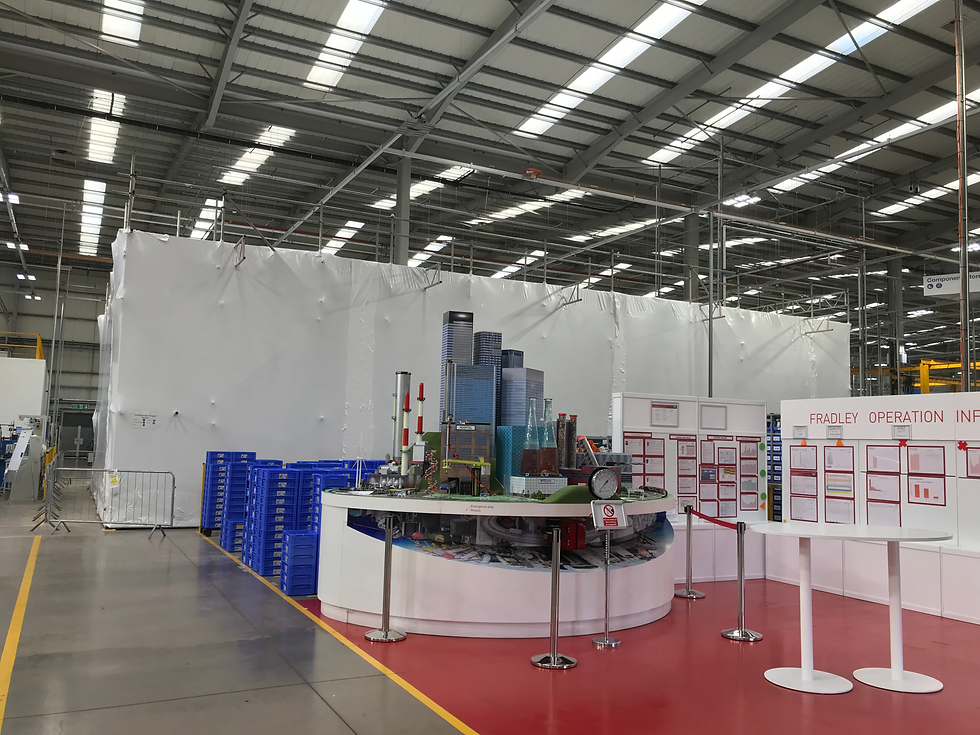
EcoShrink installed internal dust screening at Norgren in Lichfield to control dust and debris during works in an operational environment. The objective was to protect sensitive machinery and equipment by creating a controlled screened area that reduced airborne dust migration and helped keep adjacent zones cleaner throughout the programme.
Project Summary at a Glance
Site: Norgren, Lichfield (internal operational environment)
Scope: Internal dust screening / containment-style screens
Primary objective: Control dust and debris migration during works
Key driver: Protection of sensitive machinery and equipment
Outcome: Cleaner, more controlled interface between work zones and operational areas
The Brief 🎯
Norgren required an internal screening solution to segregate working areas from operational zones and reduce dust exposure around sensitive equipment. The screening needed to be installed quickly, sit neatly within a busy internal environment, and support day-to-day movement and visibility requirements.
Key Risks and Objectives
Reduce airborne dust migration to sensitive machinery and equipment
Maintain a cleaner interface between work areas and adjacent operational zones
Provide a tidy, consistent screening finish suitable for an internal workplace environment
Support practical access and safe movement around the screened area
Our Method (How EcoShrink Delivered It)
Scope planning around operations and interfaces
Confirmed the boundary line and key interfaces (routes, access points, adjacent equipment zones).
Planned the screen layout to minimise disruption while providing effective separation.
Screen installation for dust control
Installed internal dust screens to form a continuous visual and physical barrier between the works and operational areas.
Focused on continuity and tidy edges to reduce gaps where dust could migrate.
Finish and integrity checks
Checked continuity around corners, edges and interface points.
Confirmed the screened area read cleanly and provided effective segregation for the duration of the works.
Results and Outcomes ✅
The installed screening created a cleaner, more controlled interface during works, helping reduce dust and debris migration around sensitive equipment within a live operational environment.
Outcomes (claims-safe, observable):
Internal work zones separated with continuous dust screening
Reduced dust migration risk around sensitive machinery and equipment
Cleaner, more professional internal presentation during ongoing works
Practical segregation solution installed with minimal disruption to surrounding areas
Sustainability and Materials (Claims-safe)
Internal dust screening is typically driven by operational risk and cleanliness requirements. Where materials remain clean and undamaged, some components may be reusable or recyclable depending on the site’s waste route and local facilities. Practical end-of-life options depend on contamination and contractor arrangements.
Next Steps
If you need internal dust screening on a live site, particularly where sensitive equipment must be protected, EcoShrink can scope the area and propose a method-led screening solution aligned to your programme and operational constraints.
FAQ
Why use internal dust screens instead of temporary sheeting?
Proper dust screening provides a more continuous barrier and a tidier, more controllable interface, helping reduce gaps and movement that can allow dust to migrate.
Can you install dust screens in live operational environments?
Yes. We plan screen layouts around access routes and interfaces so segregation can be achieved with minimal disruption to surrounding operations.
What information do you need to scope a dust screening job?
Basic dimensions or photos of the area, access constraints, programme dates, and any special requirements (routes, doors, visibility or sensitive zones).


